






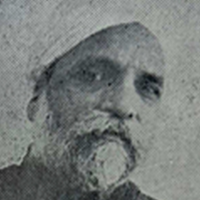



Pyara Singh Sehrai was one of the foremost progressive poets of Punjabi literature. He was born on 16 September 1915 in the village of Chhapiyanwali, in the Bathinda district of British Punjab (now in Mansa), at his maternal home. His father was Sardar Kehar Singh and his mother was Mahinder Kaur. He had one elder sister and one younger brother. He began his schooling at the age of six and a half in his village, completing four grades there, and later continued his studies while living with his maternal grandfather in Patiala, where he passed the eighth grade from City High School. He completed his matriculation from Intermediate College, Ludhiana, where Professor Hardial Singh Siri encouraged him to write poetry. Later, he graduated with a B.A. degree from Khalsa College, Amritsar. In 1938, he started his career as a teacher at Gurubakhsh Singh’s Activity School in Preetnagar. After the Partition of India, he moved to Delhi, where he began working as a proofreader. From 1956 to 1978, he served as a translator and co-editor of the famous magazine Soviet Desh.
Pyara Singh Sehrai’s poetic evolution passed through three significant phases—romantic, reformist, and finally progressive poetry. His major poetry collections include Sehrai Panchi, Tarian Di Loh, Dharti De Geet, Samay Di Vaag, Telangana Di Vaar, Shaklata, Lagran, Run Jhun, Van Trin, Guzargah, and Geet Marya Nahin Karde, among others. Alongside his original creations, he made notable contributions in the field of translation. His Punjabi translations include Lenin (a long poem by Mayakovsky), the novel Bhanj (The Rout) by Alexander Fadeyev, The Story of a Real Man by Boris Polevoy, A Golden Heart by Chingiz Aitmatov, Asya by Turgenev, as well as selected works of Lenin, along with many other writings.
His works were also published in important journals such as Arsi, Sirjana, and Lok Lehr. Prominent themes in his poetry included women’s liberation, socialism, and the struggles of the working class. He gave voice to peasants, laborers, and marginalized communities, strongly advocating world peace and raising awareness against social injustice, such as the exploitation of children and workers. By weaving Marxist ideology with Punjabi folk traditions, he brought peasant movements into literature, narrating struggles like the Muzara Movement and the Telangana Movement through his vaars (ballads). His long poem Telangana Di Vaar depicted the peasants’ struggle by blending guerrilla warfare with folk symbols like Heer, the legendary Punjabi heroine.
For his outstanding literary contributions, Pyara Singh Sehrai received several honors and awards, most notably the Soviet Nehru Award, the Balraj Sahni Memorial Award, and the Shiromani Punjabi Sahit Puraskar from the Punjab Language Department.
He passed away on 28 February 1998 at the age of eighty-two.